
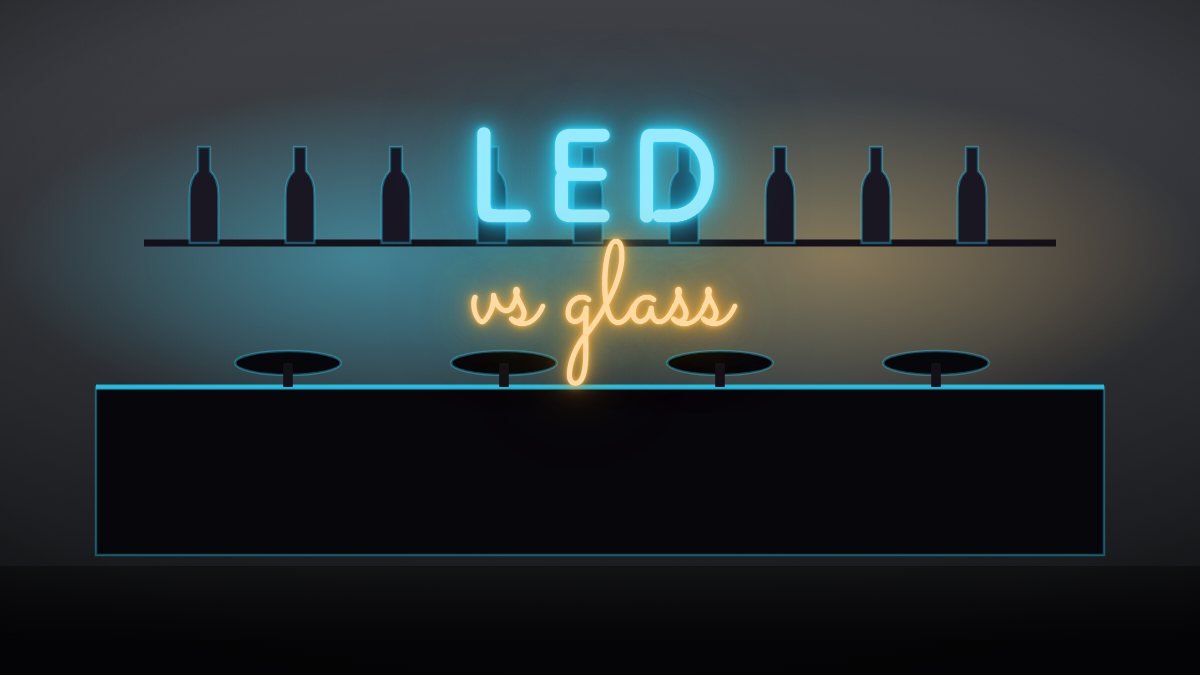
Classic glass neon has lit city streets for a century. Today most new signs are LED neon, which looks remarkably similar but works very differently. Here is a clear comparison of LED neon vs glass neon to help you decide.
How each one works
Glass neon is a sealed glass tube filled with gas, lit by a high-voltage transformer. LED neon is a strip of small LEDs inside a flexible silicone jacket that diffuses the light into a smooth line, powered by a safe 12 V adapter.
Side-by-side comparison
| LED neon | Glass neon | |
|---|---|---|
| Power use | Low, about 80% less | High |
| Heat | Cool to touch | Gets hot |
| Breakage | Flexible, shatter-proof | Fragile glass |
| Voltage | Safe 12 V | High voltage |
| Noise | Silent | Can buzz |
| Colour change | Possible (pixel LED) | No |
| Shipping | Easy, light | Difficult |
Which looks better?
Glass neon has a slightly deeper glow that some purists love. Modern LED neon has closed most of that gap: with good diffusion, a well-made LED sign photographs beautifully and is far more practical for homes, cafés and events.

Which is safer?
LED neon, clearly. It runs on low voltage, stays cool and has no glass to shatter, which makes it suitable for kids’ rooms, crowded venues and rental homes.
Which lasts longer?
Both can last for years when well made. LED neon avoids gas leaks and broken tubes, the two most common glass neon failures. What matters most is build quality: every Neon Adda sign passes 100+ quality checks before it ships.
Our recommendation
For homes, cafés, salons, gyms, events and most shops, choose LED neon. Glass neon still has a place in heritage restorations. See the options in our shop or design your own in the studio.